

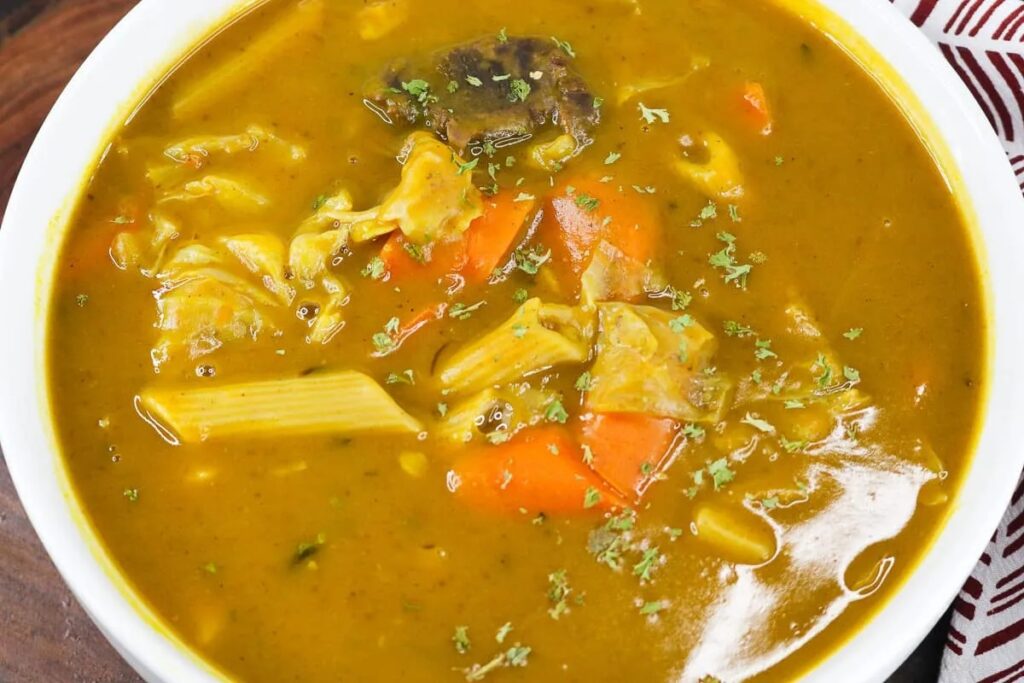
Soup Joumou is a deeply symbolic Haitian pumpkin soup, a powerful reminder of liberation and resilience, traditionally eaten on New Year’s Day to commemorate Haiti’s independence from French colonial rule in 1804, a victory that transformed this dish, once forbidden to enslaved people, into a national symbol of freedom, pride, and unity. Each bowl, a rich blend of calabaza squash, meat, vegetables, pasta, and spices, tells the story of overcoming oppression and reclaiming cultural identity, making it far more than just a meal.
The History in Every Spoonful:
Forbidden Luxury: During slavery, Soup Joumou, made from the squash that enslaved Africans cultivated, was a delicacy reserved for the French colonizers, a cruel reminder of their subjugation.
Symbol of Liberation: After the successful slave revolt and Haiti’s declaration as the first free Black republic, Haitians reclaimed the soup, serving it on January 1, 1804, to celebrate their hard-won freedom.
A Ritual of Remembrance: Today, making and sharing Soup Joumou on New Year’s Day is a sacred tradition, honoring ancestors, celebrating national identity, and passing down the legacy of resistance.
What Makes It Special:
More Than Food: It’s a cultural anchor, embodying strength, victory, and the enduring spirit of the Haitian people, as expressed in the Creole phrase, “Ayiti vivan nan chak kiyè” (Haiti lives in every spoonful).
Hearty & Flavorful: The soup features pureed pumpkin (joumou), beef, starchy vegetables (like yams, potatoes, carrots), pasta (often vermicelli), and aromatic herbs.
Family & Community: Recipes vary by household, but the essence of unity and shared history remains constant, bringing families together to reflect on their heritage.